Share


Staying safe online
We help our customers plan for and build towards long‑term financial security. Protecting your money from fraud and scams today is also an important part of supporting your overall financial wellbeing.
Financial scams are becoming increasingly common across Ireland, with fraudsters targeting individuals and businesses using ever more sophisticated methods. To help you stay protected, we’ve brought together practical guidance on how to spot potential scams and what to do if you think you may have been targeted. This information is informed by consumer warnings and guidance issued by the Central Bank of Ireland.
Why staying alert matters
Scammers often impersonate trusted organisations to gain your confidence. They may contact you unexpectedly by email, phone call, text message or through fake websites or social media adverts.
Their aim is usually to access your personal or financial information, or to persuade you to transfer money. Understanding how these scams work — and knowing what warning signs to look out for — can help reduce the risk of falling victim.
The Central Bank of Ireland encourages consumers to pause before acting and to take time to verify information when making financial decisions.
Simple steps you can take to stay safe online
There are practical actions you can take to improve your online security:
- Keep your devices up to date
Software updates often include important security fixes. Installing them promptly helps protect against known threats. Where possible, enable automatic updates. - Use strong, unique passwords
Using the same password across multiple accounts increases risk. Using three random words is a simple way to create a strong password, and password managers can help you create and store passwords securely. - Enable multi‑factor authentication (MFA)
MFA adds an extra layer of security by requiring a second step when logging in, such as a code sent to your phone. This can help protect your account even if your password is compromised. - Back up important files
Regularly backing up important documents or photos means you won’t lose everything if something goes wrong. Cloud storage or external drives are useful options. - Be cautious with links and attachments
If a message looks suspicious or unexpected, avoid clicking links or downloading attachments. Scammers often use phishing techniques to trick people into revealing personal information or installing harmful software.
Cyber security is a shared responsibility — small steps can make a meaningful difference.
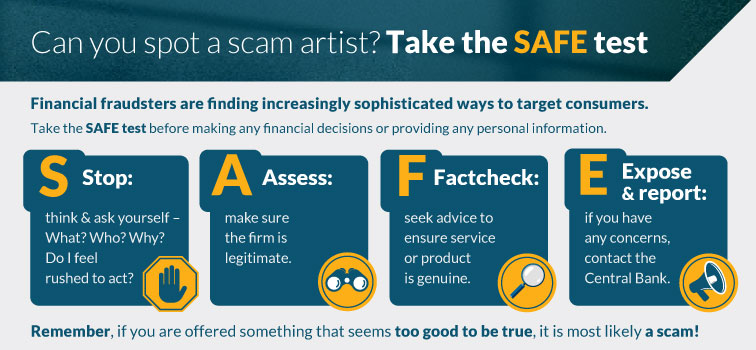
Use the SAFE test before you act
The Central Bank of Ireland advises consumers to apply the SAFE test before making financial decisions or sharing personal information:
- Stop – Pause and take time to think
- Assess – Check whether the firm or offer is legitimate
- Fact‑check – Verify details using trusted sources
- Expose and report – Report concerns if something doesn’t feel right
If something seems too good to be true, it probably is