
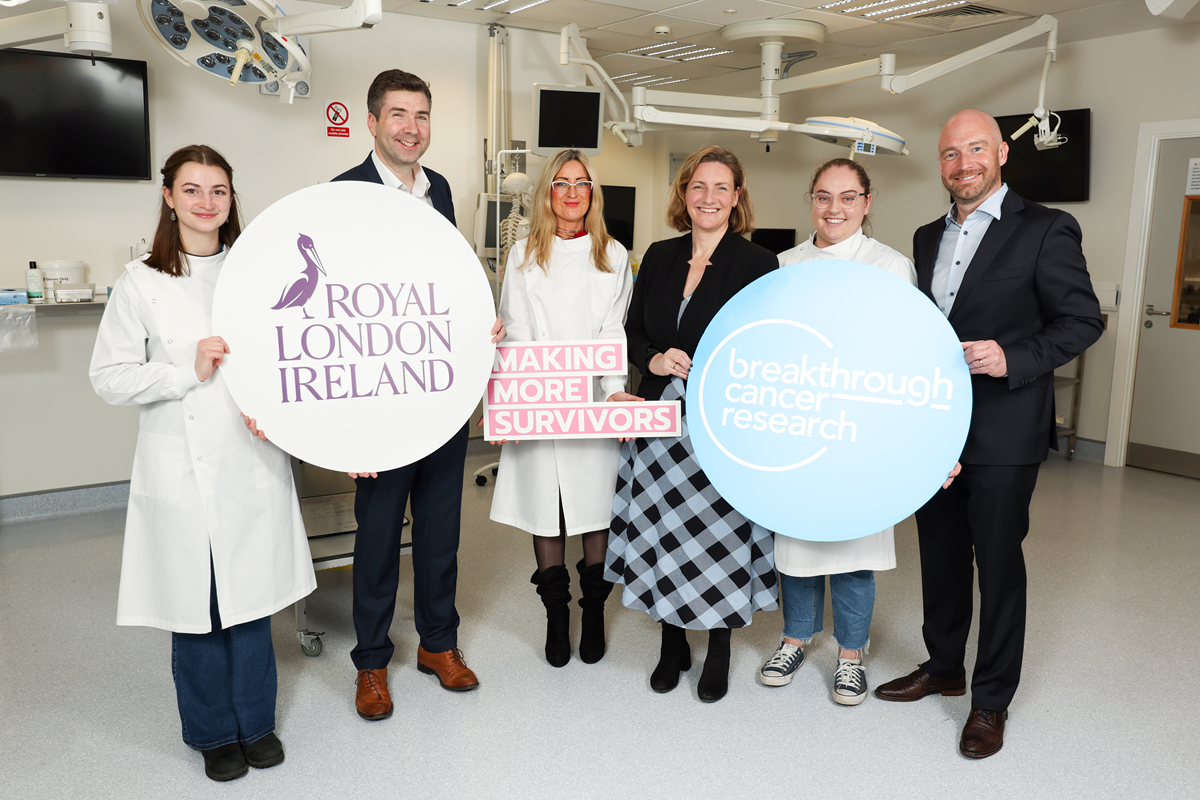
We're proud to have extended our partnership with Breakthrough Cancer Research Ireland for a third year.
In 2026, we donated €206k to help tackle cancer inequalities and support research into hard-to-treat cancers. Our total donations exceed €440k over three years.
One in two people in Ireland will develop cancer at some point in their lifetime and one person dies from cancer in Ireland every hour. 1 In 2024, 62% of our Specified Serious Illness claims were cancer related.2
Royal London Ireland is very proud of this partnership with Breakthrough Cancer Research, supporting the lifesaving work the charity does through their ongoing research into the disease.
This partnership has focused on funding research, while increasing awareness, of cancers with the lowest survival rates. Aligned with Royal London Ireland’s purpose, this partnership aims to help reduce cancer inequalities, which have a significant impact on the outcome for those affected, for this and future generations.
This year’s funding will support new research led by Dr Andrew Lyndsey (UCC) into Glioblastoma, the most common and aggressive cancerous brain tumour in adults.
“Our partnership with Breakthrough Cancer Research is very important to everyone in our organisation. We are committed to helping to fund the lifesaving work they do through their ongoing research. Reducing inequalities in cancers with the lowest survival rates can make a meaningful difference to patient outcomes, now and in the years ahead. This aligns with our company’s social impact strategy to help drive meaningful change for wider society.”
Noel Freeley, CEO of Royal London Ireland
Why cancer inequality?
We know that, unfortunately, inequalities can impact health and, more specifically, cancer outcomes. Inequalities exist due to factors outside of a person's control. This can include things like socioeconomic status, education, gender, ethnicity, age and even postcode. These factors can impact risk of getting or surviving cancer due to differences in peoples’ health and opportunities to lead a healthy life, their access to care and the quality of care they receive.
The partnership has primarily funded research projects, in the Breakthrough Cancer Research innovation fund, which focus on the cancers that have the lowest survival rates in Ireland. It will also fund the creation of evidence-based subject matter, training and resources to create more awareness, break down barriers around health education and dispel some of the myths around cancer.
“Thanks to Royal London Ireland’s exceptional support, we can invest in vital new brain cancer research, an area where greater advances are urgently needed for patients facing this particularly difficult-to-treat disease. With Royal London Ireland’s funding, we have been able to start a new multi year project in partnership with Research Ireland into Glioblastoma, the most common and aggressive brain tumour in adults. Glioblastomas claim over 200,000 lives worldwide every year and treatment has stayed largely the same for two decades.
“Research has transformed cancer survival rates, with more people living longer after a diagnosis than ever before. With Royal London Ireland’s support, we can now focus on improving outcomes for cancers that have not yet seen the same progress.”
Orla Dolan, CEO, Breakthrough Cancer Research
Previous years funding
Project: Development and Modelling of a Non-Specific Symptoms (NSS) Cancer Referral Pathway to Improve Early Detection in Ireland
Summary: This project aims to create a new referral pathway to help GPs identify and refer patients with Non-Specific Symptoms (NSS) more efficiently for further testing. By leveraging data analysis and stakeholder engagement, the pathway will streamline the referral process. Supported by national collaborators like the National Cancer Control Programme (NCCP) and Centric Health, and international partners such as Oxford University and Queen Mary University London, this initiative seeks to transform cancer care in Ireland. The goal is to reduce diagnostic delays and improve survival rates for cancers with poor prognoses.
Prof. Patrick Redmond – Royal College of Surgeons in Ireland
Project: Investigating the Role of TRPA1 in Lung Cancer
Summary: This study focuses on understanding the role of cough receptors in the development of lung cancer, specifically investigating the TRPA1 receptor. The research aims to determine if TRPA1 could be a potential target for future lung cancer treatments. By conducting thorough research, the study hopes to uncover the significance of cough receptors in lung cancer development and explore new treatment possibilities.
Dr. Diarmuid O’Connor – St. James’s Hospital – Trinity College Dublin
About Breakthrough Cancer Research
Breakthrough Cancer Research is an Irish medical research charity focused on cancer. They work to significantly impact the number of children and adults who can survive this disease. They invest in world-class research in Ireland to impact the quality of life for people with cancer and save lives. They are particularly focused on improving outcomes for those cancers, which are poorly served by current treatment options.
The charity is focused on:
- Funding world-class cancer research into poor prognosis cancers, which are poorly served by current treatment options.
- Facilitating collaboration between scientists and clinicians across Ireland and Internationally.
- Accelerating the translation of lab discoveries into new effective treatments for people with cancer.
Thanks to support and donations they have invested millions in cancer research, funding the development of new treatments for cancer.