
Fraud and scams
We help our customers plan for and build towards long‑term financial security. Protecting your money from fraud and scams today is also an important part of supporting your overall financial wellbeing.
Financial scams are becoming increasingly common across Ireland, with fraudsters targeting individuals and businesses using sophisticated and often convincing methods. To help you stay informed, we’ve brought together information on common scams, warning signs to look out for, and what to do if you think you may have been targeted. This content is informed by consumer guidance issued by the Central Bank of Ireland.
Understanding fraud and scams
Scammers often impersonate trusted organisations to gain your confidence. They may contact you unexpectedly by email, phone call, text message or through fake websites and social media adverts.
Their aim is usually to persuade you to share personal or financial information, or to transfer money. Being aware of how these scams operate can help you recognise potential risks and take time before acting.
The Central Bank of Ireland encourages consumers to pause, question unexpected contact, and verify information before making financial decisions.
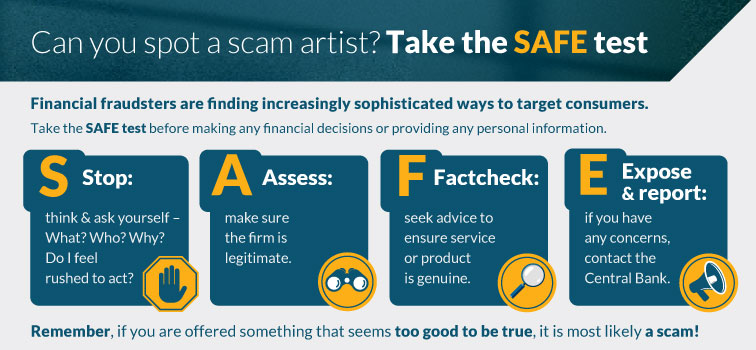
Common scam types
Phishing emails and messages
Scammers may send emails, text messages or online messages that appear to come from trusted organisations. These messages often ask you to click a link or share personal or financial information.
Impersonation scams
Some fraudsters impersonate banks, financial services providers or other trusted organisations to gain your confidence. These scams can be convincing and may involve phone calls, emails or text messages.
Investment and pension scams
Scammers may promote fake investment opportunities or pension‑related offers that promise high or guaranteed returns. These offers often create pressure to act quickly.
Fake websites and social media scams
Fraudulent websites and social media adverts can be designed to look like legitimate brands. Their aim is often to collect personal information or encourage payments to fake accounts.
Unexpected phone calls
You may receive unsolicited phone calls claiming to be from banks or financial organisations, urging you to act quickly or share information. Pressure and urgency are common warning signs.
If you’re contacted about Royal London Ireland
Royal London Ireland will not cold‑call you or send unsolicited messages asking for personal or banking information.
If you receive a communication claiming to be from Royal London and you’re unsure whether it is genuine, take time to check before responding. Always use official contact details from our website or documentation to verify any communication.